Site seems to be OK. Load issue should be resolved now.
Traces of Tx (today)
- Shakey Jake
- Drover
- Posts: 4351
- Joined: Wed Aug 16, 2017 11:10 am
- Location: Sugar Land, TX
- Contact:

Re: Traces of Tx (today)
Per T of T Facebook group:
Traces of Texas reader Chad Moss thoughtfully sent in this dynamite photo of "downtown" Kingsbury, Texas back in 1919 [Edit: actually 1914]. It looks like a healthy, commercially prosperous little Texas country town to me. Kingsbury is a small town between Seguin and Lockhart. Nice area. Chad says that he loves it for the details and that the man on the far-right edge under the awning looks like a real life "Po Campo" from Lonesome Dove. I agree. Per Chad, the buildings at the far end of the scene are still standing but everything from the two-story brick building and closer to the photographer are gone now.
Kingsbury also has a small airport and hosts a "Fly-in" for a fund raiser. I've been there a few times and have posted pictures of the event in the past. They're raffling off an old vintage car for their next event in a couple of weeks. More can be found here:
https://pioneerflightmuseum.org/
Traces of Texas reader Chad Moss thoughtfully sent in this dynamite photo of "downtown" Kingsbury, Texas back in 1919 [Edit: actually 1914]. It looks like a healthy, commercially prosperous little Texas country town to me. Kingsbury is a small town between Seguin and Lockhart. Nice area. Chad says that he loves it for the details and that the man on the far-right edge under the awning looks like a real life "Po Campo" from Lonesome Dove. I agree. Per Chad, the buildings at the far end of the scene are still standing but everything from the two-story brick building and closer to the photographer are gone now.
Kingsbury also has a small airport and hosts a "Fly-in" for a fund raiser. I've been there a few times and have posted pictures of the event in the past. They're raffling off an old vintage car for their next event in a couple of weeks. More can be found here:
https://pioneerflightmuseum.org/
- Attachments
-
- kingbury.jpg (97.04 KiB) Viewed 1551 times
- Shakey Jake
- Drover
- Posts: 4351
- Joined: Wed Aug 16, 2017 11:10 am
- Location: Sugar Land, TX
- Contact:

Re: Traces of Tx (today)
Just learned this afternoon that Phyllis Coates died of natural causes Wednesday at 96. I posted a couple of weeks ago about the Wichita Falls born actress playing the part of Lois Lane in the early Superman series.
https://www.youtube.com/watch?v=hiWC95ctOaU
- Shakey Jake
- Drover
- Posts: 4351
- Joined: Wed Aug 16, 2017 11:10 am
- Location: Sugar Land, TX
- Contact:

Re: Traces of Tx (today)
Per TSHA:
On this day in 1867, Lt. James Pike of the First United States Cavalry allegedly died when his rifle, which had malfunctioned during an Indian attack, accidentally discharged when he smashed it against a rock in frustration. Pike, whose birth date is unknown, arrived in Texas in 1859 and joined John Henry Brown's company of Texas Rangers. With the outbreak of the Civil War, Pike left Texas and went to Ohio, where he passed himself off as the nephew of Albert Pike. He joined the Fourth Ohio Cavalry in 1861 and saw considerable action as a scout, spy, and courier under Gen. William T. Sherman, who praised his "skill, courage and zeal" but warned him to "cool down." Pike was captured in 1864 and imprisoned in South Carolina, but escaped and returned to Ohio, where he wrote his memoirs of ranger and army service. In the reorganization of the army after the war, he was commissioned a lieutenant in the First U.S. Cavalry and saw at least some duty in California. The Scout and Ranger: Being the Personal Adventures of Corporal Pike, of the Fourth Ohio Cavalry (1865) is highly readable and thought to be generally factual, though many of Pike's claims are demonstrably false. J. Frank Dobie and John H. Jenkins both praised it highly.
- Attachments
-
- James Pike.jpg (123.8 KiB) Viewed 1532 times
- Shakey Jake
- Drover
- Posts: 4351
- Joined: Wed Aug 16, 2017 11:10 am
- Location: Sugar Land, TX
- Contact:

Re: Traces of Tx (today)
Per TSHA:
On this day in 1861, six men attempted to kidnap Anton Wulff, a German-born merchant in Presidio del Norte whom Lt. Col. John R. Baylor had declared to be a Union spy. The attempt, which failed, resulted in the deaths of two Confederates and one Mexican. Wulff, born in Hamburg in 1822, settled in San Antonio in 1848. He eventually opened businesses in Fredericksburg, Laredo, Coke County, and Presidio del Norte. In 1857, possibly because of rising anti-German and pro-secession sentiment in San Antonio, Wulff moved his family and business to the Mexican side of the Rio Grande at Presidio del Norte, where he supplied both United States and Confederate garrisons at Fort Davis with hay and corn. Baylor, commanding the Second Texas Mounted Rifles at Fort Bliss, called Wulff a spy and ordered that he be enticed into Texas and arrested. After the botched kidnapping attempt, Wulff moved to Monterrey and in 1863 took his family to Hamburg, where they remained until near the end of the Civil War. They returned to San Antonio, where Wulff built his famous "castle" on King William Street in 1870. Wulff died in 1894. (ed: Baylor eventually became the first governor of the Arizona Territory.)
- Attachments
-
- John R Baylor.jpg (148.17 KiB) Viewed 1516 times
- Shakey Jake
- Drover
- Posts: 4351
- Joined: Wed Aug 16, 2017 11:10 am
- Location: Sugar Land, TX
- Contact:

Re: Traces of Tx (today)
French cannons, buried by the Spanish at Fort Saint Louis in 1689, were uncovered on a private ranch in Victoria County by archeologists from the Texas Historical Commission, finally confirming the site’s location. Fort St. Louis was located where Garcitas Creek runs into Matagorda Bay. The cannons were found exactly where Alonso de Leon left them 300+ years before.
For more information, check out the always wonderful and amazing Texas Beyond History website:
https://www.texasbeyondhistory.net/.../ ... tions.html
Good stuff!
For more information, check out the always wonderful and amazing Texas Beyond History website:
https://www.texasbeyondhistory.net/.../ ... tions.html
Good stuff!
- Attachments
-
- Ft St Louis.jpg (100.48 KiB) Viewed 1509 times
- Shakey Jake
- Drover
- Posts: 4351
- Joined: Wed Aug 16, 2017 11:10 am
- Location: Sugar Land, TX
- Contact:

Re: Traces of Tx (today)
Per TSHA:
On this day in 1928, famed cowboy detective and author Charles Siringo died in Altadena, California. Siringo, born in Matagorda County in 1855, worked as a cowboy for a number of prominent Texas outfits, including those of Shanghai Pierce and George Littlefield. In 1877 he drove a herd into the Panhandle to establish the LX Ranch. During his years as an LX cowboy Siringo met the young outlaw Billy the Kid. Later he led a posse of cowboys into New Mexico in pursuit of the Kid and his gang. In 1884 Siringo left the LX to become a merchant in Caldwell, Kansas, and began writing his first book. Published in 1885, A Texas Cowboy; or, Fifteen Years on the Hurricane Deck of a Spanish Pony established Siringo's fame as the first cowboy autobiographer, and went on to become a range literature classic. In 1886 Siringo moved to Chicago, where he obtained employment with Pinkerton's National Detective Agency. For the next twenty-two years he was an exceptionally shrewd and successful cowboy detective, tracking outlaws as far as Alaska and Mexico City. After leaving the Pinkerton agency Siringo retired to his ranch in Santa Fe, New Mexico, and authored several other books, including A Cowboy Detective (1912); A Lone Star Cowboy (1919); History of "Billy the Kid" (1920); and Riata and Spurs (1927). Siringo's experiences as the quintessential cowboy and determined detective helped romanticize the West and its myth of the American cowboy.
- Attachments
-
- Ch Siringo.jpg (86.71 KiB) Viewed 1501 times
- Shakey Jake
- Drover
- Posts: 4351
- Joined: Wed Aug 16, 2017 11:10 am
- Location: Sugar Land, TX
- Contact:

Re: Traces of Tx (today)
Per TSHA:
On this day in 1889, H. S. Barber, the earliest known explorer of the Devil's Sinkhole, carved his name in the cave. Located northeast of Rocksprings in Edwards County, the Devil's Sinkhole was named in 1876 by the wives of Ammon Billings and other men who had discovered the entrance after an encounter with Indians. The pit entrance is approximately fifty feet wide and expands downward into an oval room, roughly 320 feet in diameter, that is partly filled with fallen rock. The cave is 350 feet deep. Cave explorers from all over the United States have been drawn to it because of its impressive size and rumors of lost bat rooms. Guano has been removed sporadically from the cave for use as fertilizer. The cave was added to the National Registry of Natural Landmarks in the early 1970s. It and the surrounding land are owned by the state of Texas.
- Attachments
-
- Devil's Sink Hole.jpg (65.33 KiB) Viewed 1488 times
- Shakey Jake
- Drover
- Posts: 4351
- Joined: Wed Aug 16, 2017 11:10 am
- Location: Sugar Land, TX
- Contact:

Re: Traces of Tx (today)
Per T of T Facebook Group:
In the late 1950s, Clint Murchison realized that the NFL was about to blossom into something really big and he wanted an expansion team for Dallas. There was only one problem: George Preston Marshall, owner of the Redskins, disliked Murchison and opposed a franchise in Dallas. But Clint was not to be denied. Details of the story vary, but Murchison learned that the rights to the song, "Hail to the Redskins" were for sale by the composer. Murchison, in a move that would warm the heart of J.R. Ewing purchased the rights to it and informed Marshall that he couldn't play the beloved song at Redskins games ----- unless Marshall was willing to vote "yes" when the subject of a franchise for Dallas came up for a vote at the league meeting. The ploy worked: Murchison was awarded the franchise, and the Redskins got their song back.
- Attachments
-
- clint-murchison-dallas-cowboys.jpg (471.44 KiB) Viewed 1472 times
- Shakey Jake
- Drover
- Posts: 4351
- Joined: Wed Aug 16, 2017 11:10 am
- Location: Sugar Land, TX
- Contact:

Re: Traces of Tx (today)
Per T of T Facebook Group:
Goodness gracious! Traces of Texas reader Sherry Freeman sent in this fabulous 1925 photo of the legendary Charles Goodnight (seated) in San Antonio and I'm blown away because not only does it show Goodnight but also (standing L-R) Gutzon Borglum, the man who designed and executed Mt. Rushmore, Erwin E. Smith, the photographer responsible for countless photos of working cowboys and ranches that I have posted over the years, and old-time trail cowboy Blake Alexander. This was taken by Smith himself (or somebody operating Smith's camera) at the Gunter Hotel during the first Old Time Texas Trail Riders Association meeting.
Erwin Smith had known Charles Goodnight for close to 30 years and always wanted to take Goodnight's photo but Goodnight, who didn't like posing for photographers very much, kept Smith at bay. In fact, Erwin Smith had tried to photograph the legendary cattleman in 1905 but Goodnight wouldn't allow it. Finally Smith saw his opportunity and was able to convince Goodnight to pose for this one. Goodnight was 89 years old. Incidentally, Borglum was in San Antonio because the Women's Auxiliary of the Old Trail Drivers Association had commissioned him to do a bronze monument to old Texas trail drivers and had summoned Erwin Smith to San Antonio to consult on the sculpture design.
Also, is it just me, or does it seem like, in every photograph of Goodnight, Goodnight appears ready to whip somebody's butt? I'm sure he smiled in real life but his countenance in every photo I've seen is one of a very serious man.
Thank you, Sherry. Remarkable photo with so much history!
Goodness gracious! Traces of Texas reader Sherry Freeman sent in this fabulous 1925 photo of the legendary Charles Goodnight (seated) in San Antonio and I'm blown away because not only does it show Goodnight but also (standing L-R) Gutzon Borglum, the man who designed and executed Mt. Rushmore, Erwin E. Smith, the photographer responsible for countless photos of working cowboys and ranches that I have posted over the years, and old-time trail cowboy Blake Alexander. This was taken by Smith himself (or somebody operating Smith's camera) at the Gunter Hotel during the first Old Time Texas Trail Riders Association meeting.
Erwin Smith had known Charles Goodnight for close to 30 years and always wanted to take Goodnight's photo but Goodnight, who didn't like posing for photographers very much, kept Smith at bay. In fact, Erwin Smith had tried to photograph the legendary cattleman in 1905 but Goodnight wouldn't allow it. Finally Smith saw his opportunity and was able to convince Goodnight to pose for this one. Goodnight was 89 years old. Incidentally, Borglum was in San Antonio because the Women's Auxiliary of the Old Trail Drivers Association had commissioned him to do a bronze monument to old Texas trail drivers and had summoned Erwin Smith to San Antonio to consult on the sculpture design.
Also, is it just me, or does it seem like, in every photograph of Goodnight, Goodnight appears ready to whip somebody's butt? I'm sure he smiled in real life but his countenance in every photo I've seen is one of a very serious man.
Thank you, Sherry. Remarkable photo with so much history!
- Attachments
-
- Ch Goodnight.jpg (62.86 KiB) Viewed 1460 times
- Shakey Jake
- Drover
- Posts: 4351
- Joined: Wed Aug 16, 2017 11:10 am
- Location: Sugar Land, TX
- Contact:

Re: Traces of Tx (today)
Here's a really good read (not for the faint of heart) from T of T Facebook Group today:
Warning! Warning! The Texas Quote of the Day is NOT for the squeamish! Got it? Here is the Texas Quote of the Day. I apologize for any spelling/formatting mistakes.
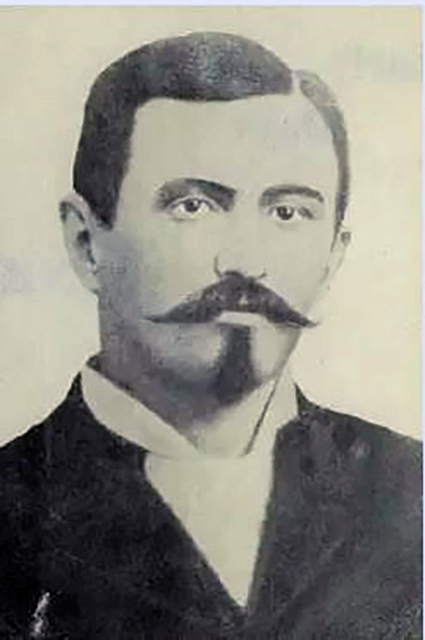
"SOME YEARS AGO one Jim McIntire, an ex-Texas Ranger, wrote an interesting volume on "Early Days in Texas," and the following acount of the Lost Valley fight appeared therein:
"From Fort Jackson I went to Fort Griffin, and sold my buffalo hunting outfit. From there I went to Loving 's ranch in the Big Lost Valley, where I learned a big company of Texas Rangers, under Captain Hamilton was camped. Ranger life looked pretty good to me, there was $40 per month in it, and plenty of plunder. So I applied to Captain Hamilton for admission into his company, and, as I was a large, stout, able-bodied man, with a good gun and a better horse, he was glad to accept me. The Rangers were camped in the valley near the ranch, and were scouring the country for Indians.
"There was always something doing with the Rangers and we kept the Indians busy keeping out of our way. One day we started out for a scouting trip up the Wichita, and struck a fresh trail. The band numbered thirty-five, and they had evidently just come in from the Reservation. We took up the trail and followed it all day. At dark we stopped to rest our horses and eat a lunch. After a short rest we saddled up and took the trail again. The grass was tall and damp, and we could follow the trail as well at night as by day. We were in the saddle all night, and by twelve o'clock the next day reached the Cox Mountains, where a great massacre had occurred about eighteen months before. A government supply train on the way to Fort Griffin, in charge of a detachment of soldiers, was attacked by Indians, and 'Only one man escaped, the rest being massacred and the wagons burned.
"The trail led up the side of the mountains and we began the ascent. When we were about half way up, we saw two Indians looming toward us. They wore red blankets, and acted as if they hadn't seen us until they came within 300 yards of our party. Then they suddenly looked up, and turned quickly and ran for a big gap in the mountains, which narrowed down to a cow trail just wide enough for one cow to pass. The Indians played their part well, and though we supposed it was a ruse to lead us into a trap, we knew there were only thirty-five in the band we were following, and did not fear that number, so we gave chase.
There were twenty-nine in our party, including Adj. Gen. Jones of Texas, and Tom Wilson, sheriff of Palo Pinto county. We pulled right in after the two Indians, following the trail until we came to a big washout which had formed a basin. In this basin was concealed two hundred Indians, under the leadership of Big Tree and Satanta, where we expected to find only thirty-five. We rode up to within 150 yards of them before we discovered that the original band had joined another and larger bunch. We had just discovered their presence, when they opened fire and eleven of our horses went down and three men were wounded. One had his left arm shot away, another wounded in the leg, while the third received a shot in the back. We charged the Indians and succeeded in stampeding them, much to the consternation of the two big chiefs, who ran in front of them waving their blankets in an endeavor to stop the band. When they got about five hundred yards away, Big Tree and Satanta, who had taken in the situation at a glance and knew they had a tremendous advantage over us with eleven of our horses gone, stopped the stampede.
We fully realized the trouble we had gotten into when Satanta and Big Tree had their men lined up again; so we sought cover in a deep ditch, formed by washouts, which ran through a grove of big oak trees. We tied our horses and brought Billy Glass, who was wounded in the back, and the fellow wounded in the leg, whose name I have forgotten, into the ravine with us, to keep them from being scalped. By this time the Indians were coming for us at full gallop. John Cone, whose arm was badly shot up, ran to a creek and dived into a water pool to hide. Tom Wilson was also cut off from joining us, and took a position behind a big oak tree.
Another one of the boys, who had emptied his gun into the advancing Indians, was cut off too, and he started down the creek with two Indians after him. He snapped his gun at them time after time in an effort to check their pursuit, but they followed right after him with drawn lances, until he came to the waterhole where Cone was hiding, when he threw his gun at the Indians and leaping into the pool. Cone, thinking he was an Indian, took a shot at him, but missed, and the Indians gave up the fight and joined the main band.
"The Indians rode pell-mell right up to the ditch, and jumped their horses over our heads. This was our opportunity, and we made the best of it, shooting them as fast as we could fire while they were jumping the ditch. After they had all crossed, we had thirty or forty of the number down. Some were in the ditch, and some fell just after they crossed. It taught them a lesson in regard to charging us, so they withdrew to a small rocky peak about three hundred yards distant, from the top of which they could pick off every one in the ditch at the point where we were located. We moved farther down, to. a more protected location, and they kept up a steady fire from the top of the peak, in a vain effort to dislodge us. Sheriff Wilson, who still held his position behind the oak tree, tried several times to join us, but every time he would stick his head out a bullet from an Indian rifle would clip bark too close for comfort. In order to keep the Indians busy we would push our hats up on the bank, and they would shoot them off instantly.
Billy Glass soon began to suffer for water, and, as he was mortally wounded, Dave Bailey and Knox Glass, a brother of the wounded man, volunteered to go to the creek and get it. It was all a man's life was worth to show his head, let alone go after water, but, as they rode racing horses, they stood a better chance than the rest of the boys. The nearest point in the stream where they had to go for water was about three hundred yards distant, and the peak where the Indians had taken up their position was about the same distance, only a little farther up. Bailey and Knox Glass took their canteens, and made a run for the trees where we had our horses tied. They mounted their fleet-footed racers and reached the creek in double-quick time. The Indians, seeing their move, started to cut off their retreat, and we kept up a steady fire on the leaders to hold them back. Bailey was down by the water's edge and succeeded in filling two canteens before the Indians got a good start. Glass, seeing that they would have to hurry to keep from being cut off, said: 'Come on, Dave; they are coming and will cut us off.' 'No, I will fill this one, if they catch me,' was Bailey's reply. He did fill it, and mounted his horse. Glass was off like a flash, and made the ditch where we were entrenched easily, but Bailey failed to take advantage of his horse's fleetness, and was the victim of the most horrible butchery I ever witnessed.
"Instead of letting his horse out, as Glass did, Bailey seemed confused and held him in. His horse was exceptionally fast, and, with the bad start, he had a chance to make it ; but he did not head straight for the ditch, and in a few seconds the Indians had him cut off. They closed in on him, driving him around in a circle, all the time shooting arrows into him and yelling with fiendish glee.
We were powerless to come to his rescue, as the only way we could cope with such a large body of Indians was by fighting them from cover. Our ammunition was running low, and only eighty rounds of cartridges remained, when the adjutant general ordered us to, cease firing. He saw that saving Bailey was out of the question, and it was absolutely necessary that we reserve our ammunition, in the event of a charge from the main body of Indians, which was likely to take place at any time.
"After shooting seventeen arrows into Bailey's back, they rode up and pulled him from his horse. Then we were compelled to witness the most revolting sight of our lives. They held Bailey up in full view, and cut him up, and ate him alive. They started by cutting off his nose and ears, then hands and arms. As fast as a piece was cut off they would grab it and eat it ravenously as the most voracious wild beast.
"We were hardened to rough life, and daily witnessed scenes that would make a 'tenderfoot's' blood run cold; but to see Dave Bailey die by inches and eaten piecemeal by the bloodthirsty Comanches and Kiowas made our hearts quail. We could see the blood running from their mouths as they munched the still quivering flesh. They would bat their eyes and lick their mouths after every mouthful. The effect of these disgusting movements on us was but to increase our desire for revenge, and we often had it later on. After eating all the fleshy parts of our brave comrade, they left him lying where they had captured him and returned to the peak. The Indians remained on the peak or behind it until dark, and we spent the rest of the afternoon in the ditch, but keeping a good lookout. We had ceased firing as Adjt. Gen. Jones' orders were not to fire until they were within fifty yard's of us, so we could secure the ammunition of the dead or wounded Indians. However, none came near; but there were plenty of dead ones on all sides, that we had killed before our ammunition ran low.
"Along in the evening Billy Glass died, the Indian bullet having penetrated his stomach and lungs. About 8 o'clock we took the remains of Glass and struck out for Fort Jackson, twenty miles away, to get reinforcements from the soldiers quartered there. As soon as we were well on the road, and felt safe from pursuit, we dug a grave and buried Glass."
----- James McIntire, "Early Days in Texas: A Trip Through Hell and Heaven," published in 1902. It should be noted that McIntire's account may not be truthful as he was not the most reputable of characters. It's true that he had been a Texas Ranger and lawman but he was also a gambler and an outlaw who, along with his friend Longhair Jim Courtright, had a 1000 dollar bounty on his head for killing two two French squatters on some ranch land in New Mexico.
Warning! Warning! The Texas Quote of the Day is NOT for the squeamish! Got it? Here is the Texas Quote of the Day. I apologize for any spelling/formatting mistakes.
"SOME YEARS AGO one Jim McIntire, an ex-Texas Ranger, wrote an interesting volume on "Early Days in Texas," and the following acount of the Lost Valley fight appeared therein:
"From Fort Jackson I went to Fort Griffin, and sold my buffalo hunting outfit. From there I went to Loving 's ranch in the Big Lost Valley, where I learned a big company of Texas Rangers, under Captain Hamilton was camped. Ranger life looked pretty good to me, there was $40 per month in it, and plenty of plunder. So I applied to Captain Hamilton for admission into his company, and, as I was a large, stout, able-bodied man, with a good gun and a better horse, he was glad to accept me. The Rangers were camped in the valley near the ranch, and were scouring the country for Indians.
"There was always something doing with the Rangers and we kept the Indians busy keeping out of our way. One day we started out for a scouting trip up the Wichita, and struck a fresh trail. The band numbered thirty-five, and they had evidently just come in from the Reservation. We took up the trail and followed it all day. At dark we stopped to rest our horses and eat a lunch. After a short rest we saddled up and took the trail again. The grass was tall and damp, and we could follow the trail as well at night as by day. We were in the saddle all night, and by twelve o'clock the next day reached the Cox Mountains, where a great massacre had occurred about eighteen months before. A government supply train on the way to Fort Griffin, in charge of a detachment of soldiers, was attacked by Indians, and 'Only one man escaped, the rest being massacred and the wagons burned.
"The trail led up the side of the mountains and we began the ascent. When we were about half way up, we saw two Indians looming toward us. They wore red blankets, and acted as if they hadn't seen us until they came within 300 yards of our party. Then they suddenly looked up, and turned quickly and ran for a big gap in the mountains, which narrowed down to a cow trail just wide enough for one cow to pass. The Indians played their part well, and though we supposed it was a ruse to lead us into a trap, we knew there were only thirty-five in the band we were following, and did not fear that number, so we gave chase.
There were twenty-nine in our party, including Adj. Gen. Jones of Texas, and Tom Wilson, sheriff of Palo Pinto county. We pulled right in after the two Indians, following the trail until we came to a big washout which had formed a basin. In this basin was concealed two hundred Indians, under the leadership of Big Tree and Satanta, where we expected to find only thirty-five. We rode up to within 150 yards of them before we discovered that the original band had joined another and larger bunch. We had just discovered their presence, when they opened fire and eleven of our horses went down and three men were wounded. One had his left arm shot away, another wounded in the leg, while the third received a shot in the back. We charged the Indians and succeeded in stampeding them, much to the consternation of the two big chiefs, who ran in front of them waving their blankets in an endeavor to stop the band. When they got about five hundred yards away, Big Tree and Satanta, who had taken in the situation at a glance and knew they had a tremendous advantage over us with eleven of our horses gone, stopped the stampede.
We fully realized the trouble we had gotten into when Satanta and Big Tree had their men lined up again; so we sought cover in a deep ditch, formed by washouts, which ran through a grove of big oak trees. We tied our horses and brought Billy Glass, who was wounded in the back, and the fellow wounded in the leg, whose name I have forgotten, into the ravine with us, to keep them from being scalped. By this time the Indians were coming for us at full gallop. John Cone, whose arm was badly shot up, ran to a creek and dived into a water pool to hide. Tom Wilson was also cut off from joining us, and took a position behind a big oak tree.
Another one of the boys, who had emptied his gun into the advancing Indians, was cut off too, and he started down the creek with two Indians after him. He snapped his gun at them time after time in an effort to check their pursuit, but they followed right after him with drawn lances, until he came to the waterhole where Cone was hiding, when he threw his gun at the Indians and leaping into the pool. Cone, thinking he was an Indian, took a shot at him, but missed, and the Indians gave up the fight and joined the main band.
"The Indians rode pell-mell right up to the ditch, and jumped their horses over our heads. This was our opportunity, and we made the best of it, shooting them as fast as we could fire while they were jumping the ditch. After they had all crossed, we had thirty or forty of the number down. Some were in the ditch, and some fell just after they crossed. It taught them a lesson in regard to charging us, so they withdrew to a small rocky peak about three hundred yards distant, from the top of which they could pick off every one in the ditch at the point where we were located. We moved farther down, to. a more protected location, and they kept up a steady fire from the top of the peak, in a vain effort to dislodge us. Sheriff Wilson, who still held his position behind the oak tree, tried several times to join us, but every time he would stick his head out a bullet from an Indian rifle would clip bark too close for comfort. In order to keep the Indians busy we would push our hats up on the bank, and they would shoot them off instantly.
Billy Glass soon began to suffer for water, and, as he was mortally wounded, Dave Bailey and Knox Glass, a brother of the wounded man, volunteered to go to the creek and get it. It was all a man's life was worth to show his head, let alone go after water, but, as they rode racing horses, they stood a better chance than the rest of the boys. The nearest point in the stream where they had to go for water was about three hundred yards distant, and the peak where the Indians had taken up their position was about the same distance, only a little farther up. Bailey and Knox Glass took their canteens, and made a run for the trees where we had our horses tied. They mounted their fleet-footed racers and reached the creek in double-quick time. The Indians, seeing their move, started to cut off their retreat, and we kept up a steady fire on the leaders to hold them back. Bailey was down by the water's edge and succeeded in filling two canteens before the Indians got a good start. Glass, seeing that they would have to hurry to keep from being cut off, said: 'Come on, Dave; they are coming and will cut us off.' 'No, I will fill this one, if they catch me,' was Bailey's reply. He did fill it, and mounted his horse. Glass was off like a flash, and made the ditch where we were entrenched easily, but Bailey failed to take advantage of his horse's fleetness, and was the victim of the most horrible butchery I ever witnessed.
"Instead of letting his horse out, as Glass did, Bailey seemed confused and held him in. His horse was exceptionally fast, and, with the bad start, he had a chance to make it ; but he did not head straight for the ditch, and in a few seconds the Indians had him cut off. They closed in on him, driving him around in a circle, all the time shooting arrows into him and yelling with fiendish glee.
We were powerless to come to his rescue, as the only way we could cope with such a large body of Indians was by fighting them from cover. Our ammunition was running low, and only eighty rounds of cartridges remained, when the adjutant general ordered us to, cease firing. He saw that saving Bailey was out of the question, and it was absolutely necessary that we reserve our ammunition, in the event of a charge from the main body of Indians, which was likely to take place at any time.
"After shooting seventeen arrows into Bailey's back, they rode up and pulled him from his horse. Then we were compelled to witness the most revolting sight of our lives. They held Bailey up in full view, and cut him up, and ate him alive. They started by cutting off his nose and ears, then hands and arms. As fast as a piece was cut off they would grab it and eat it ravenously as the most voracious wild beast.
"We were hardened to rough life, and daily witnessed scenes that would make a 'tenderfoot's' blood run cold; but to see Dave Bailey die by inches and eaten piecemeal by the bloodthirsty Comanches and Kiowas made our hearts quail. We could see the blood running from their mouths as they munched the still quivering flesh. They would bat their eyes and lick their mouths after every mouthful. The effect of these disgusting movements on us was but to increase our desire for revenge, and we often had it later on. After eating all the fleshy parts of our brave comrade, they left him lying where they had captured him and returned to the peak. The Indians remained on the peak or behind it until dark, and we spent the rest of the afternoon in the ditch, but keeping a good lookout. We had ceased firing as Adjt. Gen. Jones' orders were not to fire until they were within fifty yard's of us, so we could secure the ammunition of the dead or wounded Indians. However, none came near; but there were plenty of dead ones on all sides, that we had killed before our ammunition ran low.
"Along in the evening Billy Glass died, the Indian bullet having penetrated his stomach and lungs. About 8 o'clock we took the remains of Glass and struck out for Fort Jackson, twenty miles away, to get reinforcements from the soldiers quartered there. As soon as we were well on the road, and felt safe from pursuit, we dug a grave and buried Glass."
----- James McIntire, "Early Days in Texas: A Trip Through Hell and Heaven," published in 1902. It should be noted that McIntire's account may not be truthful as he was not the most reputable of characters. It's true that he had been a Texas Ranger and lawman but he was also a gambler and an outlaw who, along with his friend Longhair Jim Courtright, had a 1000 dollar bounty on his head for killing two two French squatters on some ranch land in New Mexico.
- Attachments
-
- McIntire.jpg (129.29 KiB) Viewed 1442 times
- Shakey Jake
- Drover
- Posts: 4351
- Joined: Wed Aug 16, 2017 11:10 am
- Location: Sugar Land, TX
- Contact:

Re: Traces of Tx (today)
Per TSHA:
On this day in 1863, the First Texas Cavalry, USA, left New Orleans for South Texas as part of the Union effort to interdict the lucrative trade between Confederate Texas and Mexico. The First was one of two regiments of Unionist cavalry from Texas to serve in the Civil War; the Second was formed in Brownsville after the Rio Grande campaign got underway. Loyalty to the Union was anything but a major consensus in Texas during the Civil War. A total of 1,915 Texas men served the Union cause, in contrast to the many thousands who served the Confederacy. Brownsville was a center of Unionist sentiment. Significant numbers of civilians who supported the North fled to the lower Rio Grande, where a provisional state government was set up under Andrew J. Hamilton, and where Edmund J. Davis and others recruited cavalrymen for the North. Davis had formed the First Texas Cavalry, USA, in New Orleans in 1862. In November 1864 the regiment was merged with the Second into the First Texas Volunteer Cavalry. This new twelve-company regiment engaged in patrolling and reconnaissance duties until the end of the war, and was mustered out of service on November 4, 1865.
- Shakey Jake
- Drover
- Posts: 4351
- Joined: Wed Aug 16, 2017 11:10 am
- Location: Sugar Land, TX
- Contact:

Re: Traces of Tx (today)
One awesome aspect of traveling around Texas is the great characters one meets. Traces of Texas reader Randal Dean was at a Ray Wylie Hubbard concert in Luckenbach when he met this man, "Boo," who operated a hat stand there and rode a '49 Harley Davidson. Let's see here: Ray Wylie Hubbard, Luckenbach, "Boo," '49 Harley ... doesn't that sound like a Texas short story in the making?
Thank you, Randal. What a great face Boo has!
- Attachments
-
- Boo.jpg (81.09 KiB) Viewed 1776 times
- Shakey Jake
- Drover
- Posts: 4351
- Joined: Wed Aug 16, 2017 11:10 am
- Location: Sugar Land, TX
- Contact:

Re: Traces of Tx (today)
Per TSHA:
On this day in 1845, two pioneer German-Texans, Friedrich Wilhelm von Wrede Sr. and Oscar von Claren, were killed and scalped by Indians at a place referred to as Live Oak Spring, ten to twelve miles from Austin, probably near Manchaca Springs. Wrede made an initial trip to Texas in 1837 and traveled and made notes of his observations in America. He returned to Germany in 1843 and compiled and published Lebensbilder aus den vereinigten Staaten von Nordamerika und Texas (1844). Wrede's travel book is a generally realistic account of the opportunities and difficulties of colonists on the American frontier, especially in Texas. The book helped to influence prospective German settlers to come to Texas, despite the negative effect of Wrede's own violent death in Texas the following year. Wrede returned to Texas in 1844 as an official of the Adelsverein. His companion in death, Oscar von Claren, immigrated from Hannover to New Braunfels, Texas, probably early in 1845. His family correspondence indicated his interest in the botany and wildlife of the New Braunfels area, and he collected turtles and snakes to sell to naturalists in Germany. He wrote Indianer bei Neu Braunfels im Jahre 1845 (1845), a group of essays depicting Texas Indians.The two authors were buried at the site of the massacre by United States soldiers, who gave them military honors. Wrede's son, Friedrich Wilhelm von Wrede Jr., settled in Fredericksburg but returned to Germany after the Civil War.
- Attachments
-
- Old Mill Remains at Manchaca Springs.jpg (754.67 KiB) Viewed 1761 times
- Shakey Jake
- Drover
- Posts: 4351
- Joined: Wed Aug 16, 2017 11:10 am
- Location: Sugar Land, TX
- Contact:

Re: Traces of Tx (today)
I've written about the "Hells Half Acre" of Fort Worth and the White Elephant saloon before. I came across this picture of the legendary White Elephant Saloon in Fort Worth, 1895 on the Traces of Texas Facebook page. The White Elephant was the site of much revelry and argle-bargle, culminating in the famous 1887 shootout between Luke Short and "Longhair" Jim Courtright. Is it just me or is the man second from right a dead ringer for Woody Harrelson? I should note that this is not the current version of the White Elephant, which opened in 1976 in the Stockyards. When this photo was taken the White Elephant was located in the 600 block of Main Street, having moved from the 300 block of Main Street a few years earlier. This White Elephant Saloon closed in 1913 after 28 years in business. Incidentally, there's a great chapter on the White Elephant in "Legendary Watering Holes: The Saloons that Made Texas Famous," a 2004 book by Richard Selcer that was published by Texas A&M University Press.
http://henryrifleforums.com/viewtopic.p ... nt#p174195
- Attachments
-
- White Elephant.jpg (84.57 KiB) Viewed 1759 times
- Shakey Jake
- Drover
- Posts: 4351
- Joined: Wed Aug 16, 2017 11:10 am
- Location: Sugar Land, TX
- Contact:

Re: Traces of Tx (today)
A visitor to the Stratford Cemetery in Sherman County would most likely pass the grave marker of Amanda J. Raines without paying it much attention. That's a pity because the story behind this unassuming marker is a great one.
Amanda Jane Crawford was born in 1853 and was only two years old when she and her parents moved to Flower Mound, Texas (Denton County) in 1855. Amanda grew up there and, in 1873, married John M. Raines. They had six children together. Amanda Jane would be just another name on a list of early settlers were it not for the fact that, when she was six years old, she was stricken with polio and was never able to walk or use her feet again.
Amanda Jane was a farmer's daughter, so it might seem that not being able to walk would be an insurmountable barrier. That didn't stop Amanda Jane. While still young, she learned to do housework on her hands and knees, doing her share of the work required to keep a frontier farm running. She literally scooted across the floor as she worked. She went to school via a specially built box that was hitched to a pony. She drove herself. Amanda Jane grew up that way and nobody paid any special attention to her. In fact, after she died, nobody spoke of her disability or could even much recall it. She was a beautiful, lively young woman, such that John M. Raines married her, deciding that it didn't matter that she had no use of her legs and feet
Amanda Jane kept working. She made her family's clothing after disconnecting the treadle on her sewing machine so that she operate it with one hand while guiding the cloth with the other. She drove her six children wherever they needed to go in her buggy or wagon, which she was an expert at driving. She did her share of community work and volunteer work for her church, too.
Amanda Jane lived to be 95 years old, outliving three of her children. In the newspaper obituary that accompanied her death, her surviving children marveled at the full life she'd managed to lead despite the challenges she endured. And they mentioned something she'd done on her fiftieth birthday, 45 years before. It was on that day, after 50 years of scooting around on the floor, that Amanda Jane Crawford Raines became the proud owner of a new wheel chair.
You know, I visit these old cemeteries and I often wonder how many Amanda Janes lie under the stones, how many great stories like hers are there waiting to be told, if only somebody knew them. Amanda Jane's grave is one of some 2,100 in the Stratford cemetery. The storyteller in me grieves to think how much gets lost when somebody passes away and how much forgotten history lies just beneath my feet.
Photo courtesy Find A Grave.
Amanda Jane Crawford was born in 1853 and was only two years old when she and her parents moved to Flower Mound, Texas (Denton County) in 1855. Amanda grew up there and, in 1873, married John M. Raines. They had six children together. Amanda Jane would be just another name on a list of early settlers were it not for the fact that, when she was six years old, she was stricken with polio and was never able to walk or use her feet again.
Amanda Jane was a farmer's daughter, so it might seem that not being able to walk would be an insurmountable barrier. That didn't stop Amanda Jane. While still young, she learned to do housework on her hands and knees, doing her share of the work required to keep a frontier farm running. She literally scooted across the floor as she worked. She went to school via a specially built box that was hitched to a pony. She drove herself. Amanda Jane grew up that way and nobody paid any special attention to her. In fact, after she died, nobody spoke of her disability or could even much recall it. She was a beautiful, lively young woman, such that John M. Raines married her, deciding that it didn't matter that she had no use of her legs and feet
Amanda Jane kept working. She made her family's clothing after disconnecting the treadle on her sewing machine so that she operate it with one hand while guiding the cloth with the other. She drove her six children wherever they needed to go in her buggy or wagon, which she was an expert at driving. She did her share of community work and volunteer work for her church, too.
Amanda Jane lived to be 95 years old, outliving three of her children. In the newspaper obituary that accompanied her death, her surviving children marveled at the full life she'd managed to lead despite the challenges she endured. And they mentioned something she'd done on her fiftieth birthday, 45 years before. It was on that day, after 50 years of scooting around on the floor, that Amanda Jane Crawford Raines became the proud owner of a new wheel chair.
You know, I visit these old cemeteries and I often wonder how many Amanda Janes lie under the stones, how many great stories like hers are there waiting to be told, if only somebody knew them. Amanda Jane's grave is one of some 2,100 in the Stratford cemetery. The storyteller in me grieves to think how much gets lost when somebody passes away and how much forgotten history lies just beneath my feet.
Photo courtesy Find A Grave.
- Attachments
-
- Raines.jpg (104.89 KiB) Viewed 1744 times
- Shakey Jake
- Drover
- Posts: 4351
- Joined: Wed Aug 16, 2017 11:10 am
- Location: Sugar Land, TX
- Contact:

Re: Traces of Tx (today)
INTERESTING FACT: "Jesse James refused to rob banks in McKinney, Texas because his favorite chili was served in McKinney & he knew that if he robbed a bank there he would not be able to return and have some of that chili. Chili is SERIOUS business in Texas."
-Traces of Texas
-Traces of Texas
- Attachments
-
- Jesse James.jpg (30.89 KiB) Viewed 1730 times
- Shakey Jake
- Drover
- Posts: 4351
- Joined: Wed Aug 16, 2017 11:10 am
- Location: Sugar Land, TX
- Contact:

Re: Traces of Tx (today)
Inducted in the Texas Radio Hall of Fame Misty was born Moda Fincher in Bronte, Texas to William Allen and Moda (Miller) Fincher on October 12, 1924, but she was known on the air simply as "Misty." She graduated from Lubbock High School in Lubbock, Texas in 1941, and moved to Fort Worth, Texas. She started her career as a vocalist and self-taught drummer for the all-girl Billye Gale Band and was with them for 5+1⁄2 years.
Misty always wanted to be a radio deejay. As a youth, she would fashion an imaginary microphone with a tomato soup can and a sawed-off broom pole. She went to work at KXOL-AM in Fort Worth, where she filed albums and pulled wire reports for sports broadcasts. She let it be known that she'd like to be a deejay, which, she recalled, "was a real thigh-slapper to management." On March 5, 1955, she was abruptly handed the midnight-to-6 am shift - seven nights a week, no days off, for $40 a week. She could not use her name. Instead, she was known as "The Frontier Gal" and had to agree to wear a Lone Ranger-like mask when out in public. She was 29 years old. Few expected her to succeed in what was then a male-dominated field.
She found more support and better pay in Lubbock in 1956, when the general manager of KDUB-AM, an AM radio station, offered her the same shift, midnight to 6 am, but with two days off each week and a raise to $75 per week. She later worked for the first Lubbock FM radio station, KBFM. Her Music with Misty program specialized in instrumental, easy-listening music. She worked on the MDA Telethon with Jerry Lewis for nineteen years.
In 1970, she went to work for KLBK-FM, where she premiered Music with Misty. When a tornado struck Lubbock on May 11, 1970, she refused to give up her post. She chose to broadcast continually for 26 hours so listeners could be reassured by her calmly delivered news reports.
In 1974 KLBK-FM changed formats to simulcast with KLBK AM and play hard rock at night. Misty moved over to KEND 1590 AM and took over the long running program, Music for Lovers Only. Her show ran from 9pm to midnight. Circa 1975, KEND was sold and the station's new owners switched to NBC's News and Information Service. Misty worked at the all-news station as a feature reporter and even did a few newscasts. Around 1976, she was hired by KNFM and moved to Midland. She worked in Midland for about five years at KNFM before returning to Lubbock. After returning to Lubbock, she did some brief part-time work on KCAS Radio, a daytime-only AM station.
In 1998, Misty came out of retirement and, at age 75, went to work as a deejay on radio station KDAV-AM, located in Lubbock's Depot District. KDAV installed an old analog studio just for her, including turntables, tape deck, and a big chrome microphone on a stand. "This little old lady..." (still wearing her trademark dark glasses) "...would shuffle in before 9pm, a tight double armed grasp on her albums held against her breast",[7] and make the magic happen.
Misty had what might be the largest collection of vinyl and shellac records in the world, totaling over 15,000 albums. "Someone to Watch Over Me" was her favorite song.
---Source: Say Goodbye to Radio
Misty always wanted to be a radio deejay. As a youth, she would fashion an imaginary microphone with a tomato soup can and a sawed-off broom pole. She went to work at KXOL-AM in Fort Worth, where she filed albums and pulled wire reports for sports broadcasts. She let it be known that she'd like to be a deejay, which, she recalled, "was a real thigh-slapper to management." On March 5, 1955, she was abruptly handed the midnight-to-6 am shift - seven nights a week, no days off, for $40 a week. She could not use her name. Instead, she was known as "The Frontier Gal" and had to agree to wear a Lone Ranger-like mask when out in public. She was 29 years old. Few expected her to succeed in what was then a male-dominated field.
She found more support and better pay in Lubbock in 1956, when the general manager of KDUB-AM, an AM radio station, offered her the same shift, midnight to 6 am, but with two days off each week and a raise to $75 per week. She later worked for the first Lubbock FM radio station, KBFM. Her Music with Misty program specialized in instrumental, easy-listening music. She worked on the MDA Telethon with Jerry Lewis for nineteen years.
In 1970, she went to work for KLBK-FM, where she premiered Music with Misty. When a tornado struck Lubbock on May 11, 1970, she refused to give up her post. She chose to broadcast continually for 26 hours so listeners could be reassured by her calmly delivered news reports.
In 1974 KLBK-FM changed formats to simulcast with KLBK AM and play hard rock at night. Misty moved over to KEND 1590 AM and took over the long running program, Music for Lovers Only. Her show ran from 9pm to midnight. Circa 1975, KEND was sold and the station's new owners switched to NBC's News and Information Service. Misty worked at the all-news station as a feature reporter and even did a few newscasts. Around 1976, she was hired by KNFM and moved to Midland. She worked in Midland for about five years at KNFM before returning to Lubbock. After returning to Lubbock, she did some brief part-time work on KCAS Radio, a daytime-only AM station.
In 1998, Misty came out of retirement and, at age 75, went to work as a deejay on radio station KDAV-AM, located in Lubbock's Depot District. KDAV installed an old analog studio just for her, including turntables, tape deck, and a big chrome microphone on a stand. "This little old lady..." (still wearing her trademark dark glasses) "...would shuffle in before 9pm, a tight double armed grasp on her albums held against her breast",[7] and make the magic happen.
Misty had what might be the largest collection of vinyl and shellac records in the world, totaling over 15,000 albums. "Someone to Watch Over Me" was her favorite song.
---Source: Say Goodbye to Radio
- Attachments
-
- Misty.jpg (8.39 KiB) Viewed 1714 times
- Shakey Jake
- Drover
- Posts: 4351
- Joined: Wed Aug 16, 2017 11:10 am
- Location: Sugar Land, TX
- Contact:

Re: Traces of Tx (today)
Anita Blair was the first guide dog handler in El Paso, Texas, when she graduated from The Seeing Eye in March 1940 with Fawn, a German shepherd. The photo is a black and white photo of Anita being guided by Fawn across a bustling city street in the early 1940s.
Just a month later, Anita and Fawn were crossing a street in El Paso when a car nearly hit her. “Fawn, the fawn-colored German shepherd, with perfect timing checked her mistress’s pace, so that the car sped past without the driver being aware that the young woman could not see,” the El Paso Times reported on April 19, 1940.
Fawn was at her side when she graduated from the Texas College of Mines and Metallurgy – now known as the University of Texas at El Paso, or UTEP – with a bachelor’s degree in 1944. She later earned a master’s degree from Texas State College for Women, now Texas Woman’s University, in Denton.
In 1946, Anita and Fawn were again in the news during a tragic fire at the 23-story Hotel LaSalle in Chicago. According to the June 6, 1946, issue of the El Paso Times, Anita was awakened by screams. “When I opened the door the smoke was so heavy I could taste it,” Anita told the newspaper. “I closed the door but did not want to get Fawn excited. Because of her I remained calm – and probably because of me she did the same.”
Fawn led Anita out the window and down the fire escape – 11 stories down – while the fire raged. Sixty-one people were killed in the fire.
In 1952, Anita became the first El Paso woman – and the first blind woman in any state – to be elected as a state representative. During her time in office, Anita fought for funding for the State School for the Deaf, teacher pay raises, and a bill that allowed women to serve on juries.
Anita returned to The Seeing Eye five more times to be matched with successor Seeing Eye dogs. Her last was Beryl, a black Labrador retriever, in 1990. Anita died in 2010 at the age of 93, and in recognition of her service as a state legislator, is buried in the Texas State Cemetery in Austin.
Just a month later, Anita and Fawn were crossing a street in El Paso when a car nearly hit her. “Fawn, the fawn-colored German shepherd, with perfect timing checked her mistress’s pace, so that the car sped past without the driver being aware that the young woman could not see,” the El Paso Times reported on April 19, 1940.
Fawn was at her side when she graduated from the Texas College of Mines and Metallurgy – now known as the University of Texas at El Paso, or UTEP – with a bachelor’s degree in 1944. She later earned a master’s degree from Texas State College for Women, now Texas Woman’s University, in Denton.
In 1946, Anita and Fawn were again in the news during a tragic fire at the 23-story Hotel LaSalle in Chicago. According to the June 6, 1946, issue of the El Paso Times, Anita was awakened by screams. “When I opened the door the smoke was so heavy I could taste it,” Anita told the newspaper. “I closed the door but did not want to get Fawn excited. Because of her I remained calm – and probably because of me she did the same.”
Fawn led Anita out the window and down the fire escape – 11 stories down – while the fire raged. Sixty-one people were killed in the fire.
In 1952, Anita became the first El Paso woman – and the first blind woman in any state – to be elected as a state representative. During her time in office, Anita fought for funding for the State School for the Deaf, teacher pay raises, and a bill that allowed women to serve on juries.
Anita returned to The Seeing Eye five more times to be matched with successor Seeing Eye dogs. Her last was Beryl, a black Labrador retriever, in 1990. Anita died in 2010 at the age of 93, and in recognition of her service as a state legislator, is buried in the Texas State Cemetery in Austin.
- Attachments
-
- Anita.jpg (59.13 KiB) Viewed 1701 times
- Shakey Jake
- Drover
- Posts: 4351
- Joined: Wed Aug 16, 2017 11:10 am
- Location: Sugar Land, TX
- Contact:

Re: Traces of Tx (today)
Per Traces of Texas Facebook Group:
One of my own photos. I took this shot of the ghost town of Barstow, Texas, in 2007. While standing there taking a series of exposures, a big yellow Labrador retriever came over, curled up at my feet, and went to sleep .... right there in the middle of the Main Street. For all I know, he's still there. An elderly man drove up and said that they would sell it all to me for $87.13 and a six-pack... and they would give me the six pack. Then he winked at me and drove away. It's that kind of place.
- Attachments
-
- Barstow.jpg (73.9 KiB) Viewed 1702 times
- Shakey Jake
- Drover
- Posts: 4351
- Joined: Wed Aug 16, 2017 11:10 am
- Location: Sugar Land, TX
- Contact:

Re: Traces of Tx (today)
Traces of Texas reader Monette Rowland graciously sent in this photo of the Peyton Colony schoolhouse in the small Freedman's community of Payton, Texas, which is seven miles east of Blanco and which was established around 1865 by Peyton Roberts. Other freedmen followed suit, and in 1872 or 1874, the first church in the area was built on land donated by Jim Upshear, who had come with his wife to Peyton by wagon train from Virginia. Also built was a small log schoolhouse. Descendants of those early settlers still live in the community.
Peyton Roberts had been born a slave in Virginia. In the 1820s, he moved to Texas with his owner, Jeremiah Roberts, settling in the Bastrop area. Peyton and his family eventually became the slaves of Jeremiah's grandson, William, who freed them during the American Civil War. The freed families agreed to work for William during the war, receiving payment in the form of supplies they would need to begin new lives. It was known as Freedman’s Colony to white settlers. The residents mostly farmed for a living. Peyton Roberts also built a lime kiln, which was used to make the mortar for the buildings erected in Peyton. It was restored in 1960.
Thank you, Monette. Cool Texas history right there.
(Source: Traces of Texas Facebook group.)
Peyton Roberts had been born a slave in Virginia. In the 1820s, he moved to Texas with his owner, Jeremiah Roberts, settling in the Bastrop area. Peyton and his family eventually became the slaves of Jeremiah's grandson, William, who freed them during the American Civil War. The freed families agreed to work for William during the war, receiving payment in the form of supplies they would need to begin new lives. It was known as Freedman’s Colony to white settlers. The residents mostly farmed for a living. Peyton Roberts also built a lime kiln, which was used to make the mortar for the buildings erected in Peyton. It was restored in 1960.
Thank you, Monette. Cool Texas history right there.
(Source: Traces of Texas Facebook group.)
- Attachments
-
- Peyton School.jpg (83.76 KiB) Viewed 1686 times